
| Line Name | Route | Color Code | Status | Key Interchange Stations |
|---|---|---|---|---|
| Line 1 | Versova – Andheri – Ghatkopar | Blue | Operational | Andheri, Ghatkopar |
| Line 2A | Dahisar East – D.N. Nagar | Yellow | Operational | D.N. Nagar |
| Line 2B | D.N. Nagar – Mandale | Red | Under Construction | BKC, Chembur |
| Line 3 | Colaba – Bandra – SEEPZ | Aqua | Under Construction | Bandra, Marol Naka, SEEPZ |
| Line 4 | Wadala – Kasarvadavali | Green | Under Construction | Wadala, Mulund, Kasarvadavali |
| Line 5 | Thane – Bhiwandi – Kalyan | Orange | Under Construction | Thane, Bhiwandi, Kalyan |
| Line 6 | Swami Samarth Nagar – Vikhroli | Pink | Under Construction | Jogeshwari, Powai, Vikhroli |
| Line 7 | Dahisar East – Andheri East | Red | Operational | Andheri East, Dahisar East |
| Line 9 | Dahisar East – Mira Bhayandar | Magenta | Under Construction | Dahisar East, Mira Road |
| Line 10 | Gaimukh – Shivaji Chowk | Violet | Proposed | Gaimukh, Shivaji Chowk |
| Line 11 | Wadala – CSMT | Brown | Proposed | Wadala, CSMT |
| Line 12 | Kalyan – Taloja | Silver | Proposed | Kalyan, Taloja |
| Line 13 | Mira Bhayandar – Virar | Grey | Proposed | Mira Road, Virar |
Introduction
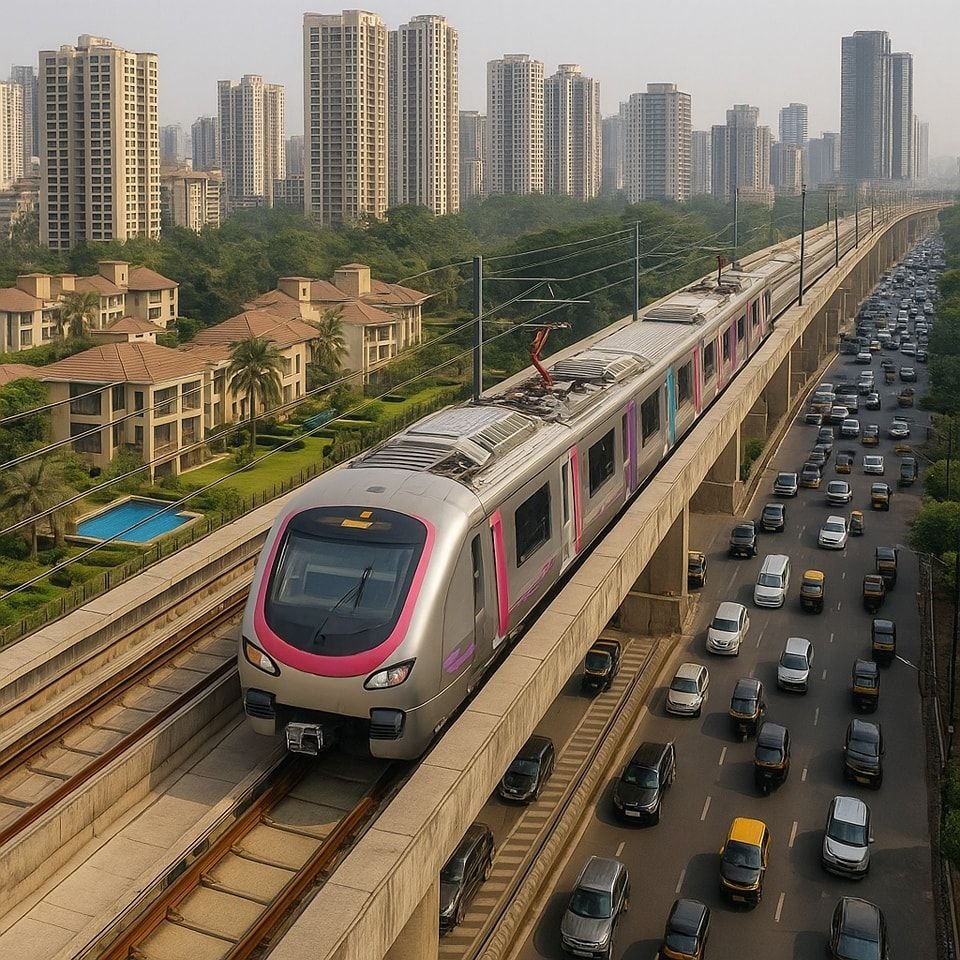
Mumbai Metro Map — the city that never sleeps — thrives on its fast-paced energy, endless diversity, and constant motion. As India’s financial capital, millions travel daily across its dense landscape. For decades, the suburban railway carried this burden, but with rapid urban growth came the need for a faster, cleaner, and more organized mode of transportation. That’s where the Mumbai Metro became a game-changer.
The Mumbai Metro Map acts as the city’s smart travel companion, helping commuters understand every line, interchange, and destination. It’s more than just a route map—it’s a digital travel assistant designed to simplify urban journeys. From Andheri to Ghatkopar, Dahisar to Colaba, the metro connects neighborhoods with efficiency and ease. Understanding how to use and access the Mumbai Metro Map allows passengers to plan trips faster, save time, and enjoy a stress-free commute through India’s busiest metropolitan network.
Mumbai Metro Map: How to Install?
Accessing the Mumbai Metro Map is simple, whether you’re a daily commuter or a tourist exploring the city. The map can be used both digitally and offline, ensuring uninterrupted access even when your mobile data is low.
For mobile users, the easiest way is to download the Mumbai Metro Official App from the Google Play Store or Apple App Store. Once installed, open the app and tap on the “Metro Map” section. You’ll see an interactive layout showing every operational and upcoming line, station names, and interchange points.
Alternatively, users can visit the Mumbai Metro Rail Corporation (MMRC) official website to view or download the latest metro map in PDF format. You can also take a screenshot of your preferred line for quick offline reference.
In metro stations, large printed maps are displayed at platforms and concourses, helping travelers visualize their routes in real time. For everyday commuters, keeping the digital version installed ensures smoother travel planning.
Mumbai Metro Map
Complete Overview
The Mumbai Metro Map offers a detailed layout of the existing and upcoming metro lines designed to connect every corner of the city. Currently, several corridors are operational, including Line 1 (Versova–Andheri–Ghatkopar), Line 2A (Dahisar–Andheri West), and Line 7 (Dahisar East–Andheri East). Together, these lines have transformed how millions move across Mumbai’s vast expanse.
The map displays routes with color-coded lines, making navigation intuitive. Each station is marked clearly, with interchanges highlighted for easy transitions between lines. For instance, D.N. Nagar serves as a key interchange connecting multiple routes.
Future expansions shown on the map—like Line 3 (Colaba–Bandra–SEEPZ) and Line 4 (Wadala–Kasarvadavali)—promise to connect southern, central, and northern Mumbai seamlessly.
This comprehensive map isn’t just a travel tool—it’s a reflection of Mumbai’s transformation into a modern, world-class transit city where time, technology, and comfort merge to redefine urban living.
Mumbai Metro Map Key Features
The Mumbai Metro Map offers far more than just route lines. It’s an intelligent system created to enhance the commuter experience. Here are its most useful features:
1. Color-Coded Lines: Each metro line is represented by a unique color, helping commuters quickly recognize their route. For instance, Line 1 is blue, while Line 2A is yellow.
2. Interchange Identification: The map clearly marks stations where passengers can change from one line to another—reducing confusion and improving travel flow.
3. Real-Time Updates: Digital versions of the map are regularly updated to include new stations, extensions, and maintenance alerts.
4. Accessibility Information: Stations with elevators, escalators, or disabled-friendly facilities are marked for convenience.
5. Smart Route Planning: Many apps featuring the map allow you to enter your start and end station to generate the fastest route and fare estimate instantly.
Together, these features make the Mumbai Metro Map a perfect combination of clarity, technology, and user-friendliness.
How To Join The Mumbai Metro Map
Joining the Mumbai Metro Map network isn’t just about using it—it’s about becoming part of Mumbai’s smart travel ecosystem. To access the map digitally, start by downloading the Mumbai Metro official app or visiting the MMRC website. These platforms offer an interactive version that helps you locate stations, track routes, and view estimated travel times.
For a more integrated experience, passengers can register on the app using their mobile number or email ID. This unlocks features like real-time tracking, smart ticketing, and personalized travel alerts.
If you’re a regular commuter, consider joining the Metro Smart Card program. The card links directly with the metro map system and stores your travel history, allowing easy fare recharges and quick entry through automated gates.
By joining digitally, commuters not only save time but also gain access to the latest map updates, fare revisions, and route changes—all in one tap.
Mumbai Metro Map: Supported Phones
The Mumbai Metro Map is designed to work seamlessly across a wide range of devices, ensuring accessibility for everyone. It supports all Android and iOS smartphones that can run basic navigation and map applications. The official Mumbai Metro app is lightweight and doesn’t require high-end specifications, making it compatible even with mid-range and budget smartphones.
For Android users, devices running Android 8.0 (Oreo) or higher can install the app easily via the Google Play Store. For Apple users, the app supports iOS 13 and above, available on the App Store.
Additionally, web browsers like Google Chrome, Safari, and Microsoft Edge can access the online map version, ensuring cross-platform compatibility.
Even if you don’t have a smartphone, you can download or print the static map from MMRC’s website. This ensures that every Mumbaikar—regardless of device—can navigate the metro system with ease and confidence.
Conclusion
The Mumbai Metro Map is more than a navigation guide—it’s the pulse of Mumbai’s modern transport revolution. In a city known for its chaos and crowds, the metro has introduced an era of order, efficiency, and sustainability. The map represents this transformation visually, helping millions move across the city with clarity and confidence.
As new lines continue to open, the Mumbai Metro Map evolves—connecting suburban and central zones into a single, synchronized system. Whether you’re a daily commuter traveling to your workplace, a student navigating college routes, or a traveler exploring Mumbai’s vibrant districts, this map ensures your journey remains smooth and informed.
With easy installation, real-time features, and universal accessibility, the Mumbai Metro Map stands as a symbol of progress—showing that technology and infrastructure together can redefine how a city moves.
