

Overview Table: Foldable Phones in 2025 at a Glance
| Aspect | Status in 2025 | Key Improvement | Remaining Challenge | User Impact |
|---|---|---|---|---|
| Display Technology | Significantly matured | Stronger flexible glass | Visible crease in some models | Better durability |
| Hinge Mechanism | Refined and compact | Reduced gap and smoother folding | Long-term wear concerns | Improved reliability |
| Software Optimization | More polished | Multi-window and app continuity | App compatibility gaps | Enhanced productivity |
| Battery Efficiency | Improved but limited | Smarter power management | Space constraints | Balanced daily usage |
| Camera Systems | Near flagship level | Advanced computational photography | Thickness compromises | Competitive imaging |
| Pricing | Slightly reduced | Wider model range | Still premium-priced | Limited mass adoption |
| Durability | Higher resistance | Water resistance improvements | Dust sensitivity | Greater confidence |
| Market Adoption | Growing steadily | Broader consumer awareness | Niche perception persists | Gradual acceptance |
Introduction
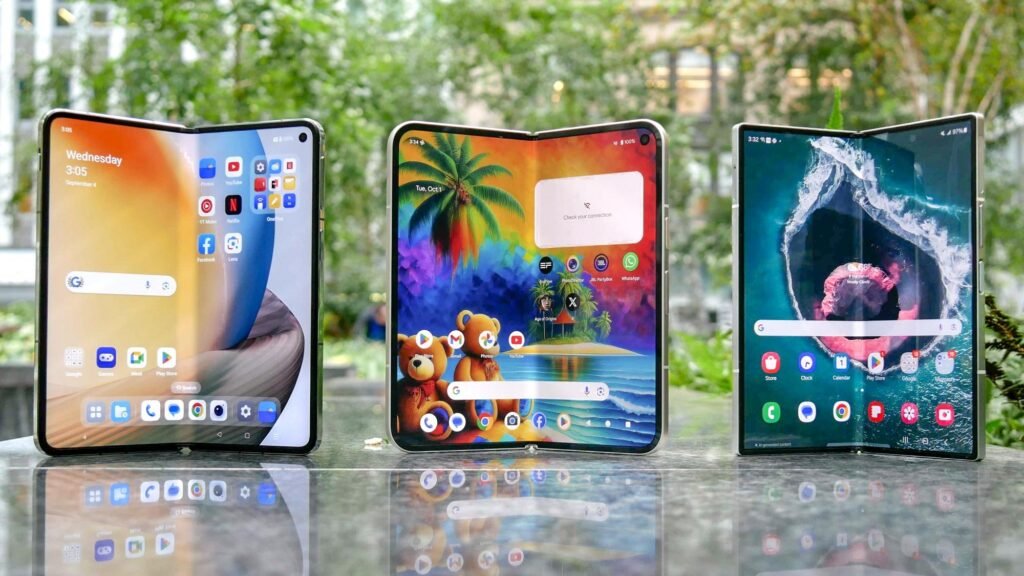
Foldable Phones in 2025 were once dismissed as futuristic experiments with questionable practicality. Early models sparked curiosity but also skepticism, plagued by fragile displays, high prices, and unclear use cases. Fast forward to 2025, and Foldable Phones in 2025 are no longer rare prototypes showcased only at tech expos. They are visible in retail stores, carried by professionals, creators, and early adopters, and increasingly positioned as premium flagships rather than novelty devices.
Yet a fundamental question remains unresolved: are foldable phones in 2025 a genuine technological innovation that improves how people use smartphones, or are they still an expensive gimmick driven more by marketing than real-world value?
This article examines foldable phones in 2025 from multiple perspectives. It blends narrative storytelling with analytical evaluation, technical breakdowns, and journalistic observation to understand whether Foldable Phones in 2025 have crossed the line from experimental curiosity to meaningful mainstream product. The focus is on user experience, engineering progress, ecosystem maturity, and long-term relevance rather than hype.
The Evolution of Foldable Phones
From Concept to Consumer Product
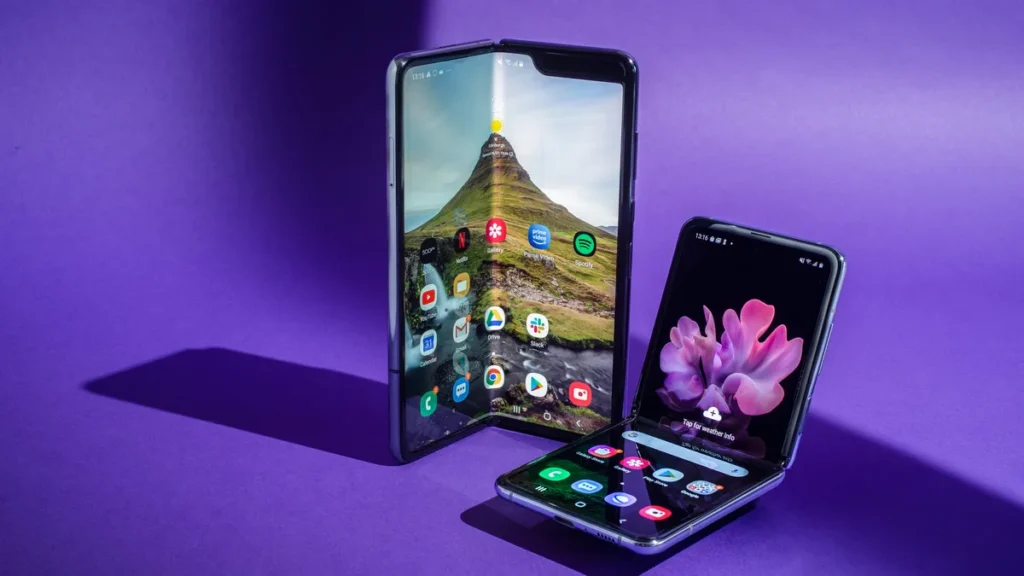
The earliest Foldable Phones in 2025 phones were proof-of-concept devices designed to demonstrate engineering ambition rather than user-centered design. They attracted attention but lacked refinement. Screens scratched easily, hinges collected debris, and software often failed to adapt to changing screen sizes.
By 2025, Foldable Phones in 2025 have evolved through multiple generations of iteration. Manufacturers have learned from early failures, improving materials, refining mechanics, and rethinking how users interact with a foldable form factor. What was once experimental has become deliberate.
Why Manufacturers Continue to Invest
Foldable Phones in 2025 represent differentiation in a mature smartphone market. Traditional slab phones have reached a point of incremental improvement, with yearly upgrades offering marginal benefits. Foldables offer a new narrative: larger screens without sacrificing portability.
From a business standpoint, Foldable Phones in 2025 also occupy the premium segment. They allow brands to justify higher prices and showcase technological leadership. This combination of innovation signaling and revenue potential explains why major manufacturers continue to invest heavily in foldable development.
The Core Innovation: Flexible Displays
Display Technology in 2025
Flexible OLED displays in 2025 are vastly improved compared to their early counterparts. The use of ultra-thin glass layered with protective polymers has increased scratch resistance and reduced the risk of permanent damage. Displays are brighter, more color-accurate, and better at handling repeated folds.
Creases, once considered a fatal flaw, are now less pronounced. While still visible under certain lighting conditions, they no longer dominate the viewing experience. For most users, the crease is an accepted compromise rather than a deal-breaker.
Practical Value of a Folding Screen
The ability to transition from a compact phone to a tablet-sized display changes how users consume content. Reading, multitasking, gaming, and video streaming benefit directly from larger screen real estate. For professionals, Foldable Phones in 2025 enable document editing, spreadsheet review, and presentations without carrying additional devices.
This is where Foldable Phones in 2025 begin to justify their existence. The value is not the fold itself, but the flexibility it provides in daily usage scenarios.
Hinge Engineering: The Mechanical Heart
Advances in Hinge Design
In 2025, hinge mechanisms are smaller, smoother, and more robust. Gapless designs have reduced dust entry and improved aesthetics. Many hinges now support multiple angles, allowing devices to remain partially folded for hands-free usage.
The tactile feel of opening and closing a Foldable Phones in 2025 has become intentional. Manufacturers tune resistance to convey durability and precision, reinforcing user trust.
Durability Concerns Remain
Despite improvements, hinges remain the most mechanically vulnerable component. Long-term wear is still a concern, especially for users who open and close their devices hundreds of times daily. While laboratory testing suggests improved longevity, real-world usage over several years remains a key unknown.
This uncertainty continues to fuel skepticism among cautious consumers.
Software Experience: Where Innovation Meets Reality
App Continuity and Multitasking
One of the most significant improvements in 2025 is software optimization. Operating systems now handle dynamic screen resizing more gracefully. Apps transition smoothly between folded and unfolded states, maintaining context and layout.
Multitasking features have matured. Users can run multiple apps side by side, drag content between windows, and treat Foldable Phones in 2025 as productivity devices rather than oversized phones.
The App Compatibility Gap
Despite progress, not all apps are optimized for Foldable Phones in 2025 displays. Some stretch awkwardly or fail to utilize the expanded screen effectively. This inconsistency undermines the promise of foldables as productivity tools.
The responsibility lies not only with device makers but also with app developers. Until Foldable Phones in 2025 usage reaches a critical mass, optimization will remain uneven.
Battery and Thermal Management
Power Challenges of Larger Displays
Foldable phones face inherent power constraints. Larger displays consume more energy, while limited internal space restricts battery size. In 2025, manufacturers mitigate this through efficient processors, adaptive refresh rates, and intelligent power management.
Battery life is generally comparable to flagship phones, but heavy multitasking on unfolded screens can drain power quickly.
Thermal Design Considerations
Managing heat in a foldable device is more complex due to split internal layouts. Improved vapor chambers and thermal materials have helped, but sustained performance under heavy load remains a challenge.
This is a technical compromise that users must accept in exchange for form factor innovation.
Cameras on Foldable Phones
Closing the Flagship Gap
Early foldables compromised camera quality to save space. In 2025, this gap has narrowed significantly. Foldables now feature camera systems that rival traditional flagship phones, supported by advanced computational photography.
The foldable form factor also enables unique camera use cases, such as hands-free shooting and using the main camera for selfies.
Design Trade-Offs
Despite improvements, camera modules contribute to thickness and weight. Balancing slim design with advanced optics remains a delicate engineering challenge.
Durability and Everyday Use
Resistance Improvements
Water resistance has become more common in foldables, increasing everyday usability. Screen coatings are more resilient, and frames are sturdier.
However, dust resistance remains a concern. Fine particles can still affect hinges and displays, requiring users to be more cautious than with traditional phones.
Psychological Durability
Beyond physical resilience, foldables face a perception challenge. Many users handle them more carefully, subconsciously treating them as fragile. This mental barrier affects adoption as much as actual durability metrics.
Pricing and Market Positioning
Are Foldables Still Too Expensive?
In 2025, foldables remain expensive, though prices have softened slightly. A wider range of models offers more choice, but they are still positioned as premium devices.
For many consumers, the price premium is difficult to justify unless the larger screen directly enhances their daily workflow.
Who Is Buying Foldables?
Current buyers include professionals, tech enthusiasts, content creators, and early adopters. Mass-market consumers remain cautious, waiting for prices to drop further and durability concerns to fade.
Innovation or Gimmick: The Real Answer
Where Foldables Succeed
Foldable phones succeed when they solve real problems. They reduce the need for multiple devices, enable better multitasking, and offer immersive media experiences in a portable form. In these contexts, foldables are undeniably innovative.
Where Skepticism Persists
Foldables feel gimmicky when the fold adds little value. Users who primarily browse social media, message, and make calls may not benefit enough to justify cost and complexity.
Innovation is not universal; it is contextual.
The Future Trajectory of Foldable Phones
What Needs to Improve
For foldables to achieve mainstream adoption, pricing must become more accessible, durability must inspire confidence, and software ecosystems must mature further.
Incremental improvements alone will not suffice. Breakthroughs in battery density, materials science, and app design are needed.
Long-Term Outlook
Foldables are unlikely to replace traditional smartphones entirely. Instead, they will coexist as a premium category, much like laptops and tablets coexist today.
Their continued evolution suggests they are more than a gimmick, but not yet a universal solution.
Conclusion
Foldable phones in 2025 occupy a complex space between innovation and indulgence. They are no longer fragile experiments or purely marketing-driven concepts. Engineering advances have addressed many early flaws, transforming foldables into capable, versatile devices that offer genuine advantages for certain users.
At the same time, they remain products of compromise. Higher prices, durability concerns, and inconsistent app support limit their appeal. For some users, foldables represent the future of mobile computing. For others, they remain unnecessary complexity.
The truth lies between extremes. Foldable phones in 2025 are real innovation, but targeted rather than universal. They are tools for those who value flexibility, multitasking, and immersive experiences, not replacements for every smartphone. As technology continues to mature, the line between innovation and gimmick will shift further. For now, foldables stand as a bold, evolving answer to a market searching for its next meaningful leap.
