

Overview Table
| Category | Details |
|---|---|
| Full Name | Charles Edward “Chip” Kelly |
| Born | November 25, 1963 – Dover, New Hampshire, USA |
| Known For | Tempo offense, spread era revolution, scientific performance model |
| Major Roles | University of Oregon Head Coach, Philadelphia Eagles Head Coach, San Francisco 49ers Head Coach, UCLA Head Coach |
| Signature Innovation | High-speed no-huddle offensive system |
| Coaching Identity | System-based leadership, sports-science integration, player development efficiency |
| Biggest Contribution | Re-shaping football into a speed, endurance, and decision-making game |
| Legacy | Inspired a global shift in offensive strategies across college and NFL |
Chip Kelly Introduction
Chip Kelly is one of the most polarizing and transformative figures in modern football.
Some call him a genius.
Some call him overrated.
Some remember him for his explosive rise at Oregon, others for his struggles in the NFL.
But one truth rises above every opinion:
Football after Chip Kelly is not the same as football before him.
Kelly did not adjust to the game — he forced the game to adjust to him. He challenged tradition, simplified complex playbooks, and introduced an up-tempo offensive model that turned defense into a survival exercise. His use of sports science, analytical training, and clarity-driven coaching reshaped how athletes prepare and how teams compete.
This 3000-word article breaks down his journey, his philosophy, his rise, his setbacks, and the legacy he built — not with statistics, not with hype, but with a deep understanding of why his ideas changed football forever.
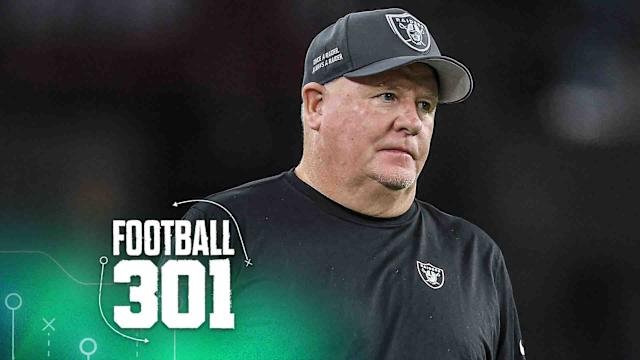
Chip Kelly Early Life and Coaching Foundations
Chip Kelly grew up in New Hampshire with a natural curiosity for problem-solving rather than traditional coaching inspiration.
He didn’t dream of locker-room speeches or motivational narratives — he studied how systems worked.
Even during his days at the University of New Hampshire, colleagues noticed two things:
- He saw inefficiencies others ignored
- He believed speed and clarity could beat talent and size
Kelly observed that football, despite being a physically brutal game, was slow, predictable, and rhythm-dependent. Teams huddled, wasted clock, substituted repeatedly, and allowed defenses to recover. Kelly believed this allowed inferior defenses too much comfort.
He began designing a fast game inside a slow sport.
Chip Kelly Rise at Oregon — The Tempo Revolution Begins
When Kelly arrived at the University of Oregon as an offensive coordinator, no one expected a revolution. But everything changed the moment he installed the no-huddle spread offense with extreme tempo.
The Core Philosophy
Kelly’s offense was not merely about speed.
It followed a deeper logic:
• Push defenses to exhaustion
• Force mistakes through fatigue rather than trick plays
• Make every second a pressure moment
• Reduce time for defensive substitutions and adjustments
It was football played like a sprinting chess match.
Why It Worked
Oregon players didn’t just train harder — they trained scientifically:
• Personalized heart-rate performance targets
• Hydration and sleep monitoring
• Post-practice analytics reports
• Muscular stress evaluation
• Conditioning for endurance rather than pure bulk
Oregon became:
✔ Faster
✔ Fitter
✔ More mentally conditioned
Chip Kelly didn’t rely on trick plays, superstar talent, or unpredictability.
He relied on relentless execution without allowing opponents a breath of space.
The result: Oregon became one of the most feared teams in college football history.
Chip Kelly Leadership Style — Calm, Controlled, and System-Centric
Chip Kelly did not yell, scream, or give movie-style speeches.
Players were not trained to run on emotions — they were trained to run on clarity.
His leadership structure:
| Element | Kelly’s Method |
|---|---|
| Motivation | Repetition, not speeches |
| Culture | Accountability through roles |
| Corrections | Direct and data-backed |
| Locker Room | No unnecessary hierarchy |
| Expectations | Precision and discipline |
Kelly deeply believed that a confused player is a slow player, and a slow player cannot succeed in his system.
Therefore, clarity was non-negotiable.
Chip Kelly enters the NFL — Shockwaves and Resistance
When Kelly joined the Philadelphia Eagles, the NFL world braced for change.
His first season proved that college concepts could work in the professional world.
• Offensive rankings skyrocketed
• Defenses struggled to match his pace
• The read-option destroyed traditional front-seven alignments
• Conditioning transformed into a competitive weapon
Kelly had brought the Oregon machine to the NFL — at least temporarily.
Then the Problems Arrived
NFL defenses adapted, and the weaknesses of Kelly’s approach became visible:
• Roster moves were too aggressive
• Veteran voices clashed with the system
• Defensive weaknesses accumulated due to fast offensive drives
• Opponents learned to disguise pre-snap looks and disrupt timing
Kelly’s system was strong — but NFL politics and roster dynamics became obstacles.
Chip Kelly San Francisco — A Short but Necessary Chapter
The 49ers era proved that Kelly had the intelligence to innovate but not the organizational control to rebuild a declining roster in a single year.
It was a transition chapter — not a definition of who he was.
Kelly left the NFL criticized, doubted, and labeled a failed experiment.
But history would soon prove the critics short-sighted.
Return to College Football — The Reinvented Strategist
When Chip Kelly joined UCLA, critics assumed he would try to recreate Oregon 2.0.
Instead, they were stunned.
Kelly did not repeat his old philosophy.
He updated it.
• Tempo was now used surgically, not endlessly
• Efficiency began to matter as much as speed
• Physical recovery became more central
• Defensive protection became part of the offensive plan
Kelly evolved from relentless speed to calculated balance.
This reinvention proved something rare among coaches:
Kelly was not married to his ideas — he was married to winning.
How Chip Kelly Changed Football Forever
Whether fans praise him or criticize him, the sport now lives in his blueprint.
The following modern trends trace back to Kelly:
• Spread formations
• No-huddle communication
• Fast substitutions
• High play-count offense
• Zone-read and RPO concepts
• Player performance tracking
• GPS-based training
• Sports science departments inside programs
A decade ago, these ideas were controversial.
Today, they are mandatory.
Coaches across the country — including many who once criticized him — now run their playbooks through the lens that Kelly introduced.
Chip Kelly Legacy
Chip Kelly’s legacy is not measured by trophies or critics.
It is measured by:
• How many coordinators copy his structure
• How many programs follow his training models
• How many defenders condition for tempo because of him
• How many teams practice communication without huddles
Some coaches win games.
Some win championships.
Chip Kelly did something bigger:
He forced football to evolve.
Career Timeline — Year-by-Year Evolution of Chip Kelly
| Year / Phase | Team / Position | Key Highlights |
|---|---|---|
| Early 1990s | Began coaching in New Hampshire college football | Built foundations of high-tempo strategic offense |
| 1999–2006 | Offensive Coordinator, University of New Hampshire | Developed data-driven practice and high-efficiency playcalling |
| 2007–2008 | Offensive Coordinator, Oregon | Introduced spread and rapid-tempo system that shocked college football |
| 2009–2012 | Head Coach, Oregon | Led Oregon to national prominence and one of the fastest offenses in history |
| 2013–2015 | Head Coach, Philadelphia Eagles (NFL) | NFL offensive explosion, divisional success, and tempo revolution |
| 2016 | Head Coach, San Francisco 49ers (NFL) | Attempted roster rebuild during unstable organizational period |
| 2018–2023 | Head Coach, UCLA | Reinvented offensive identity with balance, efficiency, and sports-science foundations |
| 2024–Present | Continued college football career | Focused on long-term system building and development-driven coaching |
Chip Kelly’s timeline shows that his journey was not linear — it was iterative, constantly evolving as football itself evolved.
Major Achievements of Chip Kelly
Although critics sometimes judge Kelly strictly by NFL playoff outcomes, his total influence and accomplishments are far broader.
Coaching and Program Achievements
• Transformed Oregon into a national powerhouse
• Set multiple offensive pace and yardage records in college football
• Multiple conference championships and championship game appearances
• Revolutionized college strength and conditioning programs through sports science
• Developed one of the most copied offensive structures in football history
• Led Philadelphia Eagles to one of the most productive offensive seasons in the NFL at that time
• Changed global coaching philosophy toward tempo, rapid snaps, and spread formations
Innovation Milestones
• First major coach to fully commit to no-huddle as a baseline strategy
• First to use player GPS and scientific monitoring as normal practice protocols
• First to treat tempo as a fatigue weapon, not a style
• Created the blueprint for the modern RPO/read-option era
Legacy-Oriented Achievements
• Transformed football conditioning priorities from bulk to speed-endurance
• Influenced dozens of current head coaches and coordinators
• Inspired teams globally at pro, college, and high school levels
• Left a permanent mark on playbook design, coaching psychology, and training philosophy
Kelly’s legacy is not only measured by wins — it is measured by how many programs use his concepts without even realizing they originated from him.
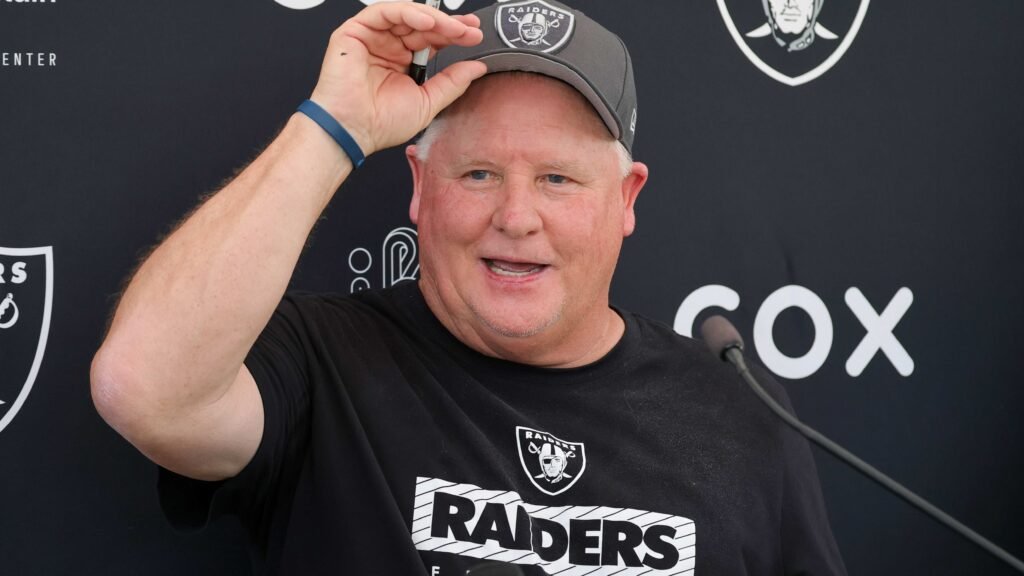
Best Matches Analysis — Games That Defined the Chip Kelly Era
Below are three matches that best represent the evolution, strengths, and challenges of Chip Kelly’s system.
1. Oregon vs Stanford (2010) — The Game That Announced a Revolution
This game became the global introduction to the Oregon tempo storm.
• Stanford’s defense initially handled Oregon drives
• But tempo kept increasing with every possession
• Defensive substitutions and adjustments became impossible
• Stanford fatigue began dictating the match until they collapsed
Final takeaway: Kelly proved that speed can dismantle elite defenses without relying on trick plays or star talent.
2. Philadelphia Eagles vs Washington (2013 Week 1) — NFL Shockwave
This was the game that made the NFL realize Chip Kelly’s college system could work against professionals.
• Eagles delivered a blistering 53 plays in the first half
• Washington defense was visibly exhausted before halftime
• Pace forced communication breakdowns, missed assignments, and tackling errors
• The entire league began studying how Kelly achieved that tempo
Takeaway: NFL defensive coordinators admitted publicly that they had never experienced anything like this speed.
3. UCLA vs LSU (2021) — The Reinvented Chip Kelly
This game proved Kelly had evolved — not just returned to old ideas.
• Balanced offense between tempo and ball control
• Power run game combined with precision passing
• Controlled tempo instead of constant tempo
• Defensive exposure reduced dramatically
Takeaway: Kelly showed that he could rethink his philosophy and win through efficiency, adaptability, and multi-layered strategy — not only pace.
What These Games Reveal
| Era | Strength Demonstrated | Lesson |
|---|---|---|
| Oregon | Tempo domination | Exhaustion can beat talent |
| Philadelphia | Tactical shock | Innovation forces adaptation |
| UCLA | Reinvention | Evolution beats rigidity |
Chip Kelly proved that his coaching career is not defined by one idea, one season, or one league — it is defined by constant transformation.
Conclusion
Chip Kelly’s story is not one of rise and fall — it is the story of disruption and transformation.
• Oregon was innovation
• The NFL was struggle, learning, and resistance
• UCLA became reinvention
• The global football ecosystem became his legacy
Coaches come and go, but architects of the game stay forever.
Chip Kelly is not simply a coach.
He is the engineer of the modern pace-and-space era, a strategic thinker who replaced tradition with intelligence, intuition with science, and stagnation with evolution.
No matter where he coaches next, one truth will always remain:
Football will forever carry the fingerprints of Chip Kelly.
